
The Fear of Being Abandoned When You Are Sick
Sometimes abandonment happens while the person is still standing beside you.
Today’s post is deeply personal. I am writing it during Disability Pride Month because disability pride is not only about visibility, resilience, or celebrating disabled lives. It is also about telling the truth about what happens when disabled people are not believed, supported, accommodated, or kept safe.
It is about naming the harm caused when serious illness is treated as inconvenience, dependence is treated as weakness, and necessary care is treated as an unreasonable demand.
It’s the fear almost every seriously ill person carries. The fear of being abandoned when you are sick and at your most vulnerable is a burden that you never want to think about.
We worry that illness will make us too difficult, too dependent, too expensive, or too exhausting to love. We fear that the person who promised to stand beside us will eventually decide that our body has asked too much of them.
For a long time, I thought abandonment meant someone leaving the relationship. I understand it differently now. A person does not have to formally leave you to abandon you.
They can remain in the house while withdrawing care. Watching you become more medically vulnerable while treating your needs as an interruption to the life they believe they deserve is cruel. It also teaches you that abandonment begins long before the relationship ends.
There is a difference between being left and being unsupported.
It does not matter whether someone says they intend to leave. What matters is whether they are present when you need them. It matters that they attend important appointments, listen to what your doctors are saying, and that they recognize danger and make room for your changing needs.
What matters is what they say when your body fails you.
Do they ask you how your appointments went or wonder what your doctor has said? Questions like, “Are you frightened?“, “How can I help?” and “What can I do?” should be normal questions in a relationship.
Or do they talk about the inconvenience? Do they talk about the groceries you couldn’t get, the floor you didn’t clean, or the plans that your illness disrupted?
When care repeatedly arrives wrapped in resentment, scorekeeping, impatience, or anger, you learn that needing help will cost you. Eventually, you just stop asking.
Learning to do everything alone…
Eventually, I became extremely good at managing serious illness alone.
I travelled to appointments alone, returned heart monitors alone, and navigated hospitals, scans, assessments, disability transport, and medical crises alone. Additionally, I learned how to calculate what my body could survive without assistance.
My independence was often praised as strength and resilience, but the reality is I had no choice.
Some forms of independence are not freely chosen. Sometimes you become capable because needing another person has become too dangerous, too humiliating, or too costly.
I was not simply managing my health in Taiwan. Instead, I spent a lot of time managing the emotional consequences of being sick near someone who resented what my illness required.
Being physically alone hurt less than being abandoned while sick beside the person who was supposed to love me.
The abandonment pattern came before the final crisis
Leaving people behind was not entirely new. The first time he abandoned me somewhere was at a mall in Taipei in 2006. I told my mother about it at the time. When he was angry, he could walk away, withdraw, or leave someone to manage the consequences alone. I had experienced it before, and I had watched versions of it happen with other people.
This was particularly difficult to understand because he carried profound fears of abandonment himself.
I still struggle with that contradiction. How does someone who knows the terror of being left repeatedly inflict that feeling on other people? There is no way to know the answer to this question.
I can only explain what it taught my nervous system. When he was angry, displeased, or determined to do what he wanted, I could not assume that my vulnerability would make him stay. In fact, I experienced the opposite. He left or retreated instead of sitting in the hard stuff with me.
The moment I realized the fear of being abandoned when you are sick is real…
I was taken off a plane in my wheelchair during a medical crisis after experiencing a PSVT episode. I was subsequently diagnosed with a blood clot and an autoimmune clotting disorder called Antiphospholipid Syndrome. My terror was understandable. Even my family understood how serious it was and that I was at risk for a pulmonary embolism, heart attack, or stroke.
I made emergency plans because I did not trust that someone in the house would be there to help me. My go-bag was beside the front door. I timed the route to my neighbour’s home in case I needed help. Friends checked on me at predetermined times. They knew that if I failed to respond, they were to call an ambulance.
My mother was trying to reach Taiwan while my best friend checked in every day. People in other countries were mobilizing because they understood that I might be in danger.
The person who was already there made a lasagna.
At noon the next day, he left for a six-week vacation in the US. He refused to postpone the trip for a week, a few days, or long enough to confirm that I was medically stable. The front door closed and he never looked back.
That was when something inside me understood what my mind had spent years trying not to know. If I became worse, I would be alone. I would have to save myself if something happened.
That summer, I got accustomed to the taste of fear in my mouth.
If I did not survive, it might not be because help was unavailable. It might be because the person closest to me had chosen not to provide it.

What medical neglect did to my sense of safety
After that, I saw everything differently. It happened every time he left to do what he wanted.
Whenever he said he was “going with or without me.”
It happened every time I rearranged my body, my medical care, and my expectations around his plans. It also happened every time I made myself smaller so that I would not become a problem.
His life continued. He traveled and took long holidays. His interests, wants, and plans always came first. He repeatedly made his own choices. Just before things ended, he told me, “I will not stop living my life because you are sick.”
That statement was devastating and it wasn’t because he was being asked to give up his entire life.
It was because he had never stopped living his life!
I was the person who had been adjusting, calculating survival and deciding which symptoms could be managed alone and which ones required hospital attention. Being expected to function, maintain the home, complete tasks correctly, and absorb criticism while managing complex illness was my norm.
The unbearable truth was not that my illness had taken his life away. It was that my life could be at risk instead.
Grieving someone who was still there
These were the moments when my trust broke, yet I continued giving chances and searching for explanations for this cruel behavior. People told me repeatedly that he was breaking his vows and I knew it.
I knew how callous the treatment was. However, the realization hit my body before my brain understood what was happening.
I was not emotionally safe or medically safe. My specialist asked me repeatedly why I was at so many appointments alone. My social workers also wondered why I had no support. But then they witnessed this behavior themselves and suddenly they understood clearly what was going on.
Meanwhile, I no longer knew whether I was physically safe. I cried harder than I had ever cried in my life. It felt as though someone I loved had died. But he was still there, pretending I did not exist most of the time.
He was moving through the house, living his life, and rarely speaking to me.
I was grieving a person who remained physically present. More precisely, I was grieving the illusion that his presence meant I was protected.
From managing illness to managing risk
After that realization, my thinking changed.
- Can I rely on him? (No.)
- What happens if I become worse? (I already had and his actions were louder than words.)
- How will I survive if I have to do this alone? (I prepared for this one over and over again. Friends and family witnessed it.)
Suddenly, I was no longer managing only my medical conditions. I was managing risk and I was still functioning by navigating complicated medical decisions. I arranged care through my social workers, built a support team, and tried desperately to keep myself stable. Eventually, I planned an international exit from Taiwan in weeks. Why? Because I finally understood that I was being abandoned while I was sick.
When you finally understand that your survival is your responsibility, you move differently.
By the time I left Taiwan, my friends did not believe it was safe for me to ride to the airport with him. They begged me not to go with him. How could the person I had moved across the world with decide that I needed no help with my departure, despite my wheelchair, my cats, my luggage, and the fact that I had a return ticket booked?
Was abandonment in my final weeks in Taiwan supposed to reassure me that it was safe to go back?
At the time, I was still struggling to accept what my friends could already see. Taking that final ride alone with him was not safe.
Looking back, I understand what they saw now.
Refusing that ride was not punishment. It was a safety decision. I did not owe anyone private access to me during the most vulnerable and consequential departure of my entire life.
Disability pride also means refusing shame about being abandoned while sick
This Disability Pride Month, I am not writing about overcoming disability. I am refusing the idea that needing help made me demanding, that reduced capacity made me lazy, or that another person’s resentment proved that my needs were unreasonable.
Disability pride means understanding that I deserved care even when I could not perform wellness, productivity, independence, or gratitude. It means recognizing that medical neglect and emotional abandonment are not natural consequences of being sick.
They are choices made by other people.
My body did not cause the neglect. My illness did not make me unworthy of safety. I did not fail because I needed help.
The failure was being made to believe that my survival needs were too much to ask of someone who had promised to stand beside me in sickness and in health.
Returning to Canada did not immediately make me feel safe
When I was trying to survive November and December 2025, I held on to one thought.
As soon as I crossed the threshold of my childhood home, I would be safe. I would close the door behind me, and I would no longer have to worry about someone in my home hurting me or leaving me to handle things alone. Never again would I have to face medical vulnerability completely alone inside my own home.
I arrived at approximately 4am on December 28 after travelling for 24 hours in a wheelchair with my two cats.
The relief was not as immediate or complete as I had imagined. I had escaped the environment, but I had not escaped the consequences. My medications were not secure. I needed doctors, testing, treatment, and specialist care. Nearly seven months later, I am still averaging two to four medical appointments each week.
Canadian health care has not made rebuilding simple. I have waited, fought through systems, completed extensive testing, and endured new medical uncertainty.
But something important has changed. The professionals treating me did not describe my illness as laziness. They did not treat my need for transportation, medication, testing, or assistance as a character flaw. They recognized that I was seriously ill and that some of what had happened placed me at real risk.
That recognition has forced me to reconsider the standards I was expected to meet in Taiwan.
My illness was not imaginary. The support I needed was not excessive. My limitations were not a moral failure. I am profoundly proud of what I have accomplished despite illness.
My grit is undeniable. I am someone to be proud of, and I know my worth.
I had simply been living in a place where my needs were treated as wrongdoing.
The life I thought I was returning to
As July 28 approaches, I am nearing seven months since I left Taiwan. I left on December 28, 2025, and because of the time difference, I crossed the threshold of my childhood home in Canada on that same date.
One calendar day held both the ending of one life and the beginning of another.
I expected to be preparing to return to Taiwan in August. My return ticket was already booked, although I had accidentally selected the wrong return date. His response was, “Great. Now I can extend my European vacation. Since you’re not coming back on the day I want you to come back, you can figure out how to get yourself to the new apartment.” I was expected to manage that journey alone in my wheelchair, with my bags and the cats.
When I came to Canada, part of me still believed I might recover, resolve the immediate crisis, and return to the life I had built over more than two decades.
Instead, I have spent these months understanding why I could not safely go back.
That unused ticket represents more than a cancelled flight. It represents the future I still thought existed and the home I thought I had. It’s the marriage I thought might somehow become safe again. It is also the life I believed I would resume once my body stabilized.
There is grief in realizing that escape was the beginning of another life that I was unprepared for.
People sometimes talk about fear of abandonment when sick as though it is insecurity.
Perhaps it’s seen as something we must work through so that we stop expecting others to leave. But not every fear is irrational and that is not what happened to me.
I became stronger while surviving abandonment and neglect.
It was not a matter of thinking that I might be abandoned someday. I realized that I already had been. It happened over and over again, in different ways and in different countries, for twenty years.
The person was still standing beside me, but concern, protection, and dependable care disappeared long ago.
That realization changed me because I realized it cannot be undone, However, it does not mean I cannot heal.
Healing does not require me to pretend it was less serious than it was. Nor does it require me to forget the moment someone showed me that I could not trust them with my life. That is betrayal, after all.
Healing required me to trust what I was seeing and hearing.
Having support when you are seriously ill is not a luxury. It can determine whether you receive treatment, whether you reach the hospital, whether you can rest, and whether you remain stable enough to keep fighting.
Medical neglect does not only affect the body. It changes how you understand love.
Isolation teaches you to fear your own needs. It makes every symptom feel like an inconvenience for which you must apologize. Neglect can turn your home into a place where you are constantly assessing danger.
Sometimes being sick does not have a visible look. But neglect does.
Some stories are about what happened. This one is about what I finally understood. I left because I realized that remaining there required me to gamble with my life.
When I pulled away in my wheelchair with my cats and bags, I was not abandoning someone else. I was leaving as soon as I was ‘strong’ enough to save myself.
Author’s Note
This essay is part of a larger body of writing about illness, survival, medical vulnerability, and rebuilding after leaving an unsafe environment.
It describes my own experiences and understanding of events that unfolded over a period of years. This story centers on several defining moments, but those moments existed within a much larger pattern.
I am sharing it because emotional and medical abandonment inside a relationship can be difficult to recognize, particularly when the person causing harm remains physically present. Silence protects the wrong things.
Many people have asked how they can help. My GoFundMe is still open. I’m 51, living in my parents’ basement with complex chronic illness, and rebuilding my life and health care after leaving a 23-year relationship with nothing.


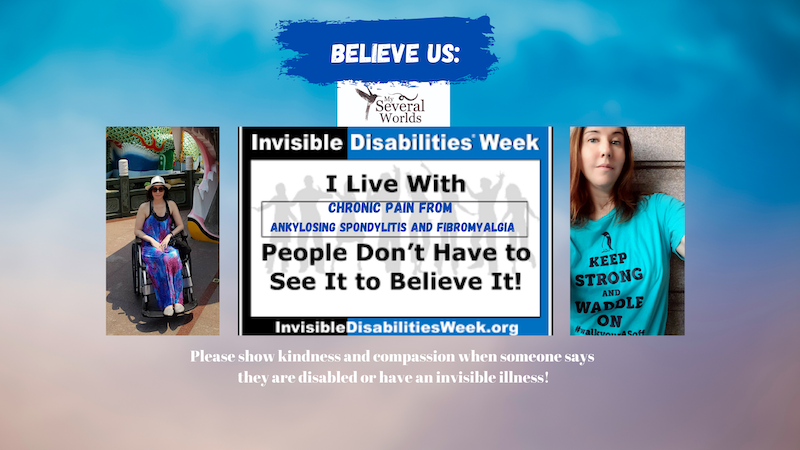


Carrie
I’m a chronically ill and disabled Canadian writer, patient advocate, international businesswoman, artist, and lifelong geek at heart.I lived in Taiwan for 23 years before repatriating to Canada at the end of 2025. My Several Worlds began as a travel and expat blog, but over the years it has grown with me through chronic illness, disability awareness, advocacy, business ownership, systems change, and the messy business of rebuilding a life when your body and the world around you do not always cooperate.I’ve lived several lives in one body. I built a massive international recruiting business called Reach To Teach Recruiting, became a professional writer and patient advocate, and somehow ended up as a chronically ill systems nerd who gets wildly excited about websites, healthcare policy, research rabbit holes, cats, and whatever is blooming in my garden.I’ve also modeled in Canada, China, and Taiwan, including one very memorable Discover Taipei cover involving a pineapple, which I still consider peak expat achievement.I’m a bit of a jack of all trades and a self-professed autodidact. I love art, flower arranging, reading — which is an understatement if you’ve seen my Goodreads profile. I have a special place in my heart for science, technology, law, health and medicine, history, disability policy, and culture.Animal videos make me cry. I hate cooking. You can find me nerding out at home most of the time due to being mostly housebound. If I'm not engaged in one of the activities listed above, I'm probably building websites.Check my About page to learn why I’m taking you on this journey with me through My Several Worlds.


