
Reverse Culture Shock and Returning to Canada After Almost 25 Years Abroad
When I created My Several Worlds in 2007, it was a travel site focused on destinations, culture and the experience of living abroad. I later wrote for publications including Travel + Leisure Southeast Asia, covering a region that had become more familiar to me than the country where I was born. After working in publishing for years in Asia, I became a businesswoman in 2010 and Taiwan business owner in 2012.
I left Canada close to 25 years ago. I spent 19 of those years living in Taiwan and three years living in China. Having moved to China and Taiwan and now back to Canada, I’m no stranger to uprooting my life. Nor am I oblivious to the hardships of setting up life somewhere new. I just never expected it in my homeland.
During my years abroad, I watched Taiwan transform itself.
New buildings appeared and transportation networks expanded. I used the slow train to get into Taipei during my first year in Taiwan and now the island is hyper connected with a high speed rail, an extensive MRT system in Taipei and New Taipei, and luxury coach buses that traverse the island.
Technology became embedded in my day to day life. Cities grew brighter, faster and easier to navigate. Taiwan was always moving forward.
When I returned to Ontario, I expected Canada to have undergone a similar transformation. Instead, one of the greatest shocks was how little it seemed to have changed. Each time I’ve come home for a visit I’ve been shocked by what things look like.
The roads are in bad shape. Buildings are old and not well lit. Government offices are dated. Public transportation remains 100% inadequate. Businesses still rely on telephone calls, yet nobody answers the phone.
Essential appointments mostly cannot be booked online. Regional infrastructure that would dramatically improve people’s lives remained trapped in endless political arguments.

Canada had certainly changed in some ways, but it does not feel as though it has grown.
In many respects, it feels as though it has stagnated.
People talk extensively about the culture shock of moving abroad. They warn you about unfamiliar food, language barriers, social customs, bureaucracy and the possibility of feeling like an outsider.
Far fewer people explain what happens when you return as a stranger to your homeland.
Reverse culture culture shock is the surreal experience of arriving in a country that is supposed to be familiar and realizing you no longer know how ordinary life works. You recognize the landscape, speak the language, and you understand the broad cultural rules. (Kind of. We’re in a post pandemic world now and North America has changed.)
But your instincts, expectations and habits were shaped somewhere else.
You are not a tourist, but you feel like one.
I did not experience reverse culture shock because I had forgotten Canada. Rather, I experienced it because I remembered the Canada I grew up in.
I also spent more than two decades watching Taiwan and Asia advance at extraordinary speed.
The contrast has been disorienting, frustrating and occasionally hilarious. Here are some examples of reverse culture shock I have experienced since returning to Canada.
Everything is expensive
I knew Canada would cost more than Taiwan. I understood this before I returned, but I sure wasn’t prepared for encountering Canadian prices in the wild.
Groceries, mobile-phone plans, restaurant meals, household products, transportation, postage, personal care items and veterinary services have all produced varying degrees of shock.
Do not even get me started on vets. I’ll leave it at this. It cost me $30 at my vet in Taiwan to have my cats chipped and their check-ups done so they could fly. My first vet appointment with Bijoux, who has lost her belly fur from stress, was $272 CAD. I later learned they up charged me on a product for her stomach that was on Amazon for $30. They charged me $72. Told ya not to get me started. I will not be going back there.
The cost of mailing almost anything is enough to make me reconsider whether the recipient truly needs it. Shipping a parcel does not feel like an errand. It feels like a major financial commitment requiring research, comparison and emotional preparation. When I think of the excitement I felt at sending packages for the first time, by myself in China and Taiwan, and that I did it IN CHINESE – I wish so much I had experienced that here again.
Food prices are startling. Small purchases accumulate at astonishing speed. A routine trip into a store can end with me staring at a receipt and wondering what I bought.
I still convert prices into New Taiwan dollars. This never improves my experience.
One meal out with a girlfriend in May was $30 for a plate of slightly burned Buffalo chicken pieces and that didn’t even include a regular drink. I have not eaten out since.

There is an overwhelming amount of choice
Canadian stores contain an absurd number of versions of everything. For example, I have never seen so much bottled water in my life.
There is spring water, mineral water, distilled water, purified water, alkaline water, electrolyte water, flavoured water and expensive water sold in elaborate bottles that appear to promise eternal youth.
The same thing happens with bread, cereal, yogurt, toothpaste, laundry detergent, toilet paper and practically every other consumer product.
A simple purchase becomes a research project. The only thing that helps me is the giant MADE IN CANADA stickers that I’m supposed to be following because we are boycotting US products.
Btw, I’m boycotting the US for the same reasons, and for one other main reason that is apparent if you’ve read enough of my story this year. ,
Back to food though. Which size offers the best value? Which brand is actually good? Is it cheaper at another store? Do I want regular, natural, organic, low-sodium, high-protein, environmentally friendly or fortified with something I did not previously know I needed? Is it worth driving all over town to get it cheaper? NOPE.
More choice is supposed to create convenience but it only produces decision fatigue in me.
In Taiwan, I was accustomed to smaller stores, familiar brands, and a more manageable range of options. Canada offers dozens varieties of bottled water but requires me to drive for 15 minutes to get it. My god, what I would give to hear the 7-Eleven chimes right now and my friendly Taiwanese 7-Eleven cashiers.
Everything is SO FAR AWAY
I heard this one just last night. It’s only a 90-minute drive.
Canada is enormous and I know it. But after nearly two decades on a densely populated island, I had forgotten what that vastness means in daily life within reliable public transportation.
In Taiwan, convenience was built into the neighbourhood. Food, pharmacies, convenience stores, medical clinics and public transportation were all a stone’s throw away. Even when a destination was farther away, an extensive transit network made it accessible.
In Ontario, especially outside a major city, “close” can mean a 20- or 30-minute drive. This is something I still can’t do. My arms seem to be held to the same rules as my legs. I get 20-30 minutes of use out of them each day and that’s it. I won’t be using them much the next day. Right now I’m alternating between driving into town every other day and it’s always for health appointments. I’ve not yet had time to go out and enjoy time just for me.
A medical appointment can consume more than half a day once transportation is included. Visiting someone requires planning. Running three errands involves route optimization. Going into Ottawa is the central event of the day.
Canadians talk about these distances casually. “It’s only an hour away.”
Only? In one hour, I could be halfway across Taiwan by high speed rail. Dang, I miss that so much!
After 23 years in Asia, Canada sometimes feels less like a country than a vast collection of paid parking lots connected by highways. (No free parking here, by the way. IMO, there are two places that should offer free parking and that’s hospitals and universities.)
A car is not a convenience here. It is NEEDED infrastructure.
In Taiwan, transportation was something I accessed.
I could take a taxi, bus, train, MRT or high-speed rail. There was no need to own and maintain an entire machine to participate in ordinary life. I drove a scooter in Taiwan, by the way, and was quite good at navigating through traffic with hundreds of other scooter drivers.
In rural Ontario, transportation is something I must personally provide. After arriving here, I learned very quickly that I needed wheels asap. Relying on my parents to get me around was a must during the winter, but that was not a sustainable option for any of us. I started researching vehicles that fit my Robooter X40 in March. I bought my new car on June 19, 2026.
Without a vehicle, many ordinary activities are difficult or impossible. Healthcare, groceries, employment, appointments and social connection can all depend on having access to a car. Now I have to pay for it, insure it, fuel it, maintain it and change the tires twice a year. It introduces an enormous new category of responsibility and expense. And I’m only a part-time driver. It’s September 26th and I’m still using the same tank of gas that came with my wheels on June 19th. But I need to fill up soon and I’m dreading the cost.
My wheels give me independence, but it has also shown me how deeply Canadian communities are organized around the assumption that every adult can drive, afford a vehicle, and keep that vehicle operating.
A car-dependent society limits everyone who cannot meet that expectation. This includes disabled people, seniors, young people, low-income families and anyone who cannot or does not want to drive.
In Taiwan, public transportation gave me mobility. In Canada, mobility comes with financing, insurance and winter tires.
Canadians fight against transportation that could transform their lives
There is currently a major debate about commuter buses in Carleton Place. Larger transportation projects, including a billion-dollar high-speed rail proposal, is generating intense opposition. This perplexes me so much.
I understand concerns about cost. Large infrastructure projects require scrutiny, planning and public accountability. But I also know what fast, reliable public transportation can do because I built my daily life around it.
I once lived approximately an hour away from the publishing house where I worked. That distance did not force me to own a car. It did not prevent me from accepting the job or consume my entire day in traffic.
I boarded a lightning-fast MRT (subway) and travelled into the city every morning. It connected my home to my work and expanded where I could afford to live and where I could work.
Efficient transportation does much more than move people from one station to another. It changes where people can work, study, receive medical care, spend money and establish homes. Additionally, it creates access for disabled people, seniors, students and people without cars. It connects smaller communities to larger opportunities.
In Canada, public transportation is often discussed as an expense. In Taiwan, it means freedom.
Canada still organizes daily life around phone calls
Canada loves the telephone.
Want to book an appointment? Call.
Need information from a government office? Call.
Waiting for a specialist? The office will call without warning, possibly from an unfamiliar number.
Need to change something? Leave a message.
Prepare yourself not speak to anyone human on the phone when you call. The most bewildering part is that nobody answers!
You call, listen to a recorded menu, select an option, wait, leave a message and hope someone eventually calls back. They return the call while you are unavailable. They leave another message. You call again.
One simple appointment can become a multi-day game of administrative phone tag.
Phone calls also demand immediate performance. There is no time to gather documents, translate information, review instructions or formulate a careful response. You must be ready when the phone rings. So I’m busy carrying around my mini medical journal so I can flip to a needed page on the fly.
In February, while I was getting set up, I was spending upwards of 4-6 hours PER DAY on the phone. I cried at the end of every day from anger and frustration.
Voicemail remains a major communication system
Telephone culture comes with voicemail culture. Canadian voicemail messages are often delivered at extraordinary speed.
“HiCarrieThisIsSomeoneFromAnOfficePleaseCallUsBackAtSixOneThree…”
I replay them several times while attempting to identify the caller, understand the purpose of the call, and accurately record the number because, of course, many medical numbers are UNLISTED.
Sometimes callers provide a first name but not the name of the organization. Occasionally, they call from a number that does not accept incoming calls.
Then I must determine whether the message involves healthcare, government services, work, insurance, banking or something else entirely.
Don’t get me started on the spam calls which have had me in a tizzy more than once and required the police to come to my home in March.

Booking anything is unnecessarily difficult
Canada has technology.
I know it does because as an ambassador of Canada, part of my job was meeting with visiting Canadian delegations and welcoming Taiwanese tech businesses who were working together. Canadian engineering firms designed and engineered the famous tuned mass damper system for Taipei 101.
Taiwan is also welcoming Canadian companies that specialize in hard tech across sub-sectors such as semi conductors, aerospace and robotics, and advanced communications.
Unfortunately, it seems that the tech that Canada is selling elsewhere in the world is not applied here in Canada to make daily life easier. Even when online systems exist, they are often disconnected from the people or services they supposedly support. I’ve waited on calls for 30 minutes only to be cut off with no way of leaving a message or getting the info I need.
This is one of the greatest contrasts with Taiwan. Canada, or at least rural Ontario, feels like it’s 10 years behind!
In Taiwan, QR codes and LINE will take you almost everywhere. LINE was not simply a messaging app. It was woven into ordinary life. People used it to communicate with businesses, receive information, arrange services and maintain contact without initiating a formal telephone call.
QR codes connected physical spaces to digital information quickly and naturally.
In Canada, I often feel as though I have returned to a country where the technology exists but the systems remain organized around 1998.

Canada is technologically advanced without feeling advanced
Canada is described as a technologically advanced country. I guess technically, it is.
Taiwan is modern, glittering and always growing. It feels as though it believes in its future.
Canada does not lack the knowledge or resources to advance, but it often appears unwilling to invest in progress. My reverse culture shock came not from discovering how much Canada had changed, but from discovering how much it had not.
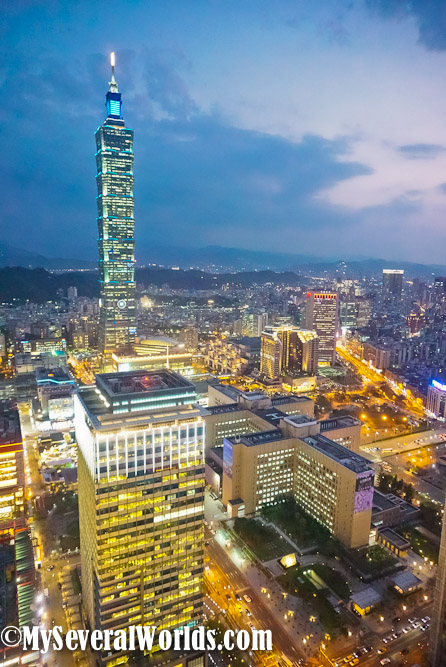
Taiwan was always growing. Canada feels stagnant.
When many Westerners imagine Taiwan, they still picture a “developing” Asian country. That image bears little resemblance to the Taiwan I know.
Taiwan is modern, glittering and always growing. Construction is constant. Public transportation expands. Neighbourhoods evolve. New buildings, public spaces and technologies appear. The country is crowded and imperfect, but it possesses a powerful sense of movement.
Taiwan believes in its future. Returning to Canada has often produced the opposite feeling.
Canada does not lack the knowledge or resources to advance.
My reverse culture shock did not come from discovering how dramatically Canada had changed while I was gone. It came from discovering how much of it had not.

Public parks reveal what a society considers important
Taiwan’s parks are some of the most beautiful and democratic spaces I have encountered. They are not simply patches of grass. They are active public spaces designed for entire communities.
Many contain exercise equipment for children, adults and seniors. People walk, stretch, dance, socialize and move their bodies together. Older adults gather early in the morning. Children play. Families spend time outside. Parks are integrated into neighbourhood life.
The equipment makes movement accessible without requiring a gym membership or expensive home machinery. The spaces recognize that public health, community and recreation belong together.
Returning to Canada, I was struck by how empty or neglected many public spaces feel by comparison.
Parks may contain little more than grass and a bench. Some have become associated with discarded needles, drug use and social abandonment. Problems are allowed to accumulate while public investment remains limited.
Canada has vastly more physical space than Taiwan. Yet Taiwan often does much more with the space it has.
The difference is not simply aesthetic. It reflects two different ideas about public life.
Even the public bathrooms are worse
Before returning to Canada, I never imagined I would look back fondly on the squat toilets at Taipei Main Station. And yet here we are.
Taipei Main is one of the busiest transportation hubs in Asia. Enormous numbers of commuters pass through it every day. Some bathrooms contain squat toilets, which many Canadians would automatically interpret as evidence that the facilities are less developed.
But the style of toilet tells you much less about modernity than whether the facility is clean, maintained, available and connected to functional public infrastructure.
Many bathrooms in Taiwan are regularly cleaned despite extraordinary levels of use.
In Canada, I have encountered public bathrooms that are older, dirtier, poorly maintained or unavailable altogether. Businesses lock them. Facilities close early. Accessible stalls are not always designed or maintained with disabled people’s real needs in mind.
It is one of the more humbling lessons of reverse culture shock.
A Canadian sitting toilet is not automatically more civilized than a squat toilet at Taipei Main. Sometimes it is worse!
Everyday interactions feel ruder
Canadians are internationally famous for being polite.
After 19 years in Taiwan, I have some MAJOR questions about this reputation.
Not every Canadian is rude, just as every person in Taiwan is not unfailingly considerate. But the baseline of everyday interaction feels different.
I am deeply disturbed by the signs that are posted everywhere reminding people not to be rude or abusive to staff. Meanwhile, my experience is that staff are often incredibly rude to customers. I understand this is a post COVID world, but it boggles my mind that people have to be reminded to treat others with decency and respect and yet here we are and it’s 2026.
In Taiwan, ordinary encounters were often softened by courtesy, patience and attentiveness. There is a strong service culture in Taiwan that is very welcoming. Even when a situation could not be resolved, the interaction itself was often handled with care. I miss Taiwanese service SO MUCH. No one was ever rude or unkind or impatient with me. They went out of their way to help. (Except Taiwan mobile. Skip them if you can.)
In Canada, I have repeatedly encountered abruptness, impatience and defensiveness. I called a rheumatology office in February simply to ask a question and was rudely interrupted and told I couldn’t jump the line. I never asked to jump the line; I simply asked WHAT the timeline for seeing a specialist is.
Asking a reasonable question can be treated as an inconvenience. Requesting help can produce irritation rather than assistance. Customer service sometimes feels adversarial before the conversation has even begun.
Perhaps people who have remained in Canada do not notice it. They may have adjusted gradually as social norms changed.
I arrived after a long absence and felt the difference immediately.
Canadian systems are remarkably fragmented
Returning to Canada meant entering separate systems for healthcare, prescriptions, disability support, taxation, federal benefits, provincial benefits, legal services and medical documentation.
Each system has its own rules, forms, definitions, telephone numbers, timelines and waiting periods. One department rarely seems to know what another department is doing.
Information must be repeated. Documents must be resubmitted. Facts that have already been established must be proven again in slightly different ways.
I did not return to the Canadian system I remembered. Instead, I returned to an alphabet for my life. OW. ODSP. CPP-D. DTC. CRA. CDB. OVFHT. Seriously, my brain hurts trying to remember it all.
Apparently, fluency in Canadian now requires acronyms. That’s fine, but I just learned all this in Chinese and now I’m doing it again here.
In Taiwan, I carried one National Health Insurance card. The healthcare system was not perfect, but it offered a degree of integration and predictability. I understood how to access care, where to go, and what would happen next. For example, I knew I could leave a letter with my provider and all my providers could see the context. This provided safety for me as a complex patient.
In Canada, I speak the language but often understand the systems less. That is one of the central contradictions of reverse culture shock. Language fluency does not equal institutional fluency.
Sometimes I understood more about what was happening inside a Taiwanese hospital operating partly in Mandarin than I do inside a Canadian system operating entirely in English.
I am Canadian, but I am no longer only Canadian. Asia shaped me too.
The deepest form of reverse culture shock is not about bottled water, telephone calls, public bathrooms or sales tax.
It is the realization that returning does not restore the person who originally left.
Nearly 25 years abroad changed how I communicate, work, travel, eat, shop, solve problems and understand community. I left Taiwan just shy of my 20-year Taiwanniversary, plus I lived in China for three years. Asia shaped my entire adult life.
I knew how Taiwan worked and I understood its rhythms, systems and unspoken rules. Additionally, I knew how to cross the country, find medical care, communicate with businesses and move through ordinary life.
In Canada, people hear my accent and assume I belong automatically. In many ways, I do. But belonging is much more complicated than citizenship.
I am not a visitor here, yet I often feel like a stranger. Certainly I am “other”. I have given up on the hopes of meeting other people like me. I am the strange woman who lived across the world for a quarter of a century.
Taiwan is embedded in the way I understand the world, but I am a permanent resident of Taiwan, not Taiwanese.
The longer someone lives abroad, the less meaningful the word “home” becomes as a simple geographical fact. Home can be the country where you were born. It can also be the place where you built your adult identity, learned new ways of living and developed the instincts that carry you through the day.
After close to 25 years away, I did not simply return to Canada. I arrived as a cross-cultural adult in the country of my childhood.
Returning is another form of travel
Reverse culture shock is not ingratitude.
It does not mean I hate Canada or believe Taiwan is perfect. I have written about things I love and hate about Taiwan, and I can apply the same honest gaze to Canada.
The purpose of cultural writing is not to declare one country the winner.
It is to pay attention and notice that convenience, cleanliness, courtesy, accessibility and modern infrastructure are not superficial details. They shape how people experience every day of their lives.
Moving abroad taught me to observe carefully, ask questions and accept that I would not immediately understand everything around me.
Returning to Canada requires those same skills. I’m still learning and I’m learning as fast as I can.
The greatest surprise of repatriation is that after close to 25 years abroad, coming back was not the end of my journey. It was another journey into a foreign country except this time, the country was my own.

You Might Be Interested In


Carrie
I’m a chronically ill and disabled Canadian writer, patient advocate, international businesswoman, artist, and lifelong geek at heart.I lived in Taiwan for 23 years before repatriating to Canada at the end of 2025. My Several Worlds began as a travel and expat blog, but over the years it has grown with me through chronic illness, disability awareness, advocacy, business ownership, systems change, and the messy business of rebuilding a life when your body and the world around you do not always cooperate.I’ve lived several lives in one body. I built a massive international recruiting business called Reach To Teach Recruiting, became a professional writer and patient advocate, and somehow ended up as a chronically ill systems nerd who gets wildly excited about websites, healthcare policy, research rabbit holes, cats, and whatever is blooming in my garden.I’ve also modeled in Canada, China, and Taiwan, including one very memorable Discover Taipei cover involving a pineapple, which I still consider peak expat achievement.I’m a bit of a jack of all trades and a self-professed autodidact. I love art, flower arranging, reading — which is an understatement if you’ve seen my Goodreads profile. I have a special place in my heart for science, technology, law, health and medicine, history, disability policy, and culture.Animal videos make me cry. I hate cooking. You can find me nerding out at home most of the time due to being mostly housebound. If I'm not engaged in one of the activities listed above, I'm probably building websites.Check my About page to learn why I’m taking you on this journey with me through My Several Worlds.


